
By Dr Tristan Jenkinson
Introduction
Due to the success of their challenges put out at the end of last year, Bellingcat have decided to put out more regular challenges, with a plan for there to be a set released each month.
Last month this involved analysis of multispectral satellite images. This month I was thrilled to see that the challenges were to be wildlife based.
Those that know me know that I love birds and wildlife, and spend quite some time walking around countryside (and numerous zoos) with my camera… as will become apparent later in the write up. This was a set of challenges that I was really looking forward to, and they did not disappoint.
The challenges (including those from last year and from March 2025) can be found at https://challenge.bellingcat.com/.
Keeps your eyes open for the May challenges, which hopefully will be first available on Monday 5 May 2025.
Spot the Location
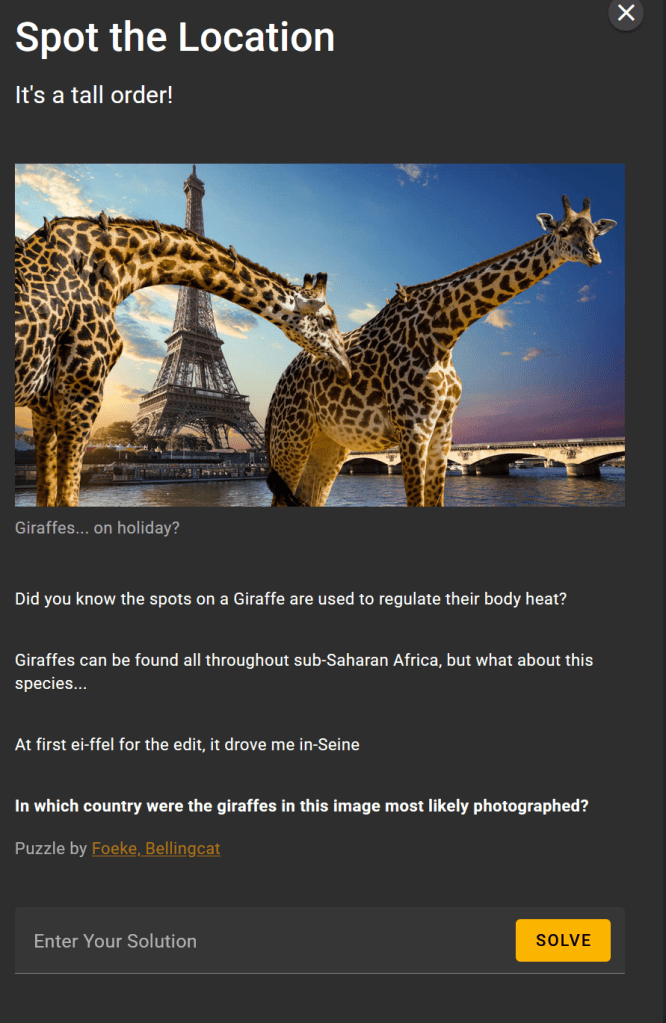
As a first note, the edits to the photograph has likely been in order to remove background details which may have potentially been used for better geolocation. We want to use information about the giraffes themselves, rather than the image to try and work out where they may have been photographed.
A helpful point to note here is the wording of the challenge, specifically “which country”. This suggests that there is only one country that is correct. So we are likely looking for a species of giraffe which is only native (or overwhelmingly native) in a single country. An alternative would be that there are very limited numbers in the wild and they may be in a known conservation centre somewhere. Let’s assume for now that we are looking for a species mainly found in a single country natively.
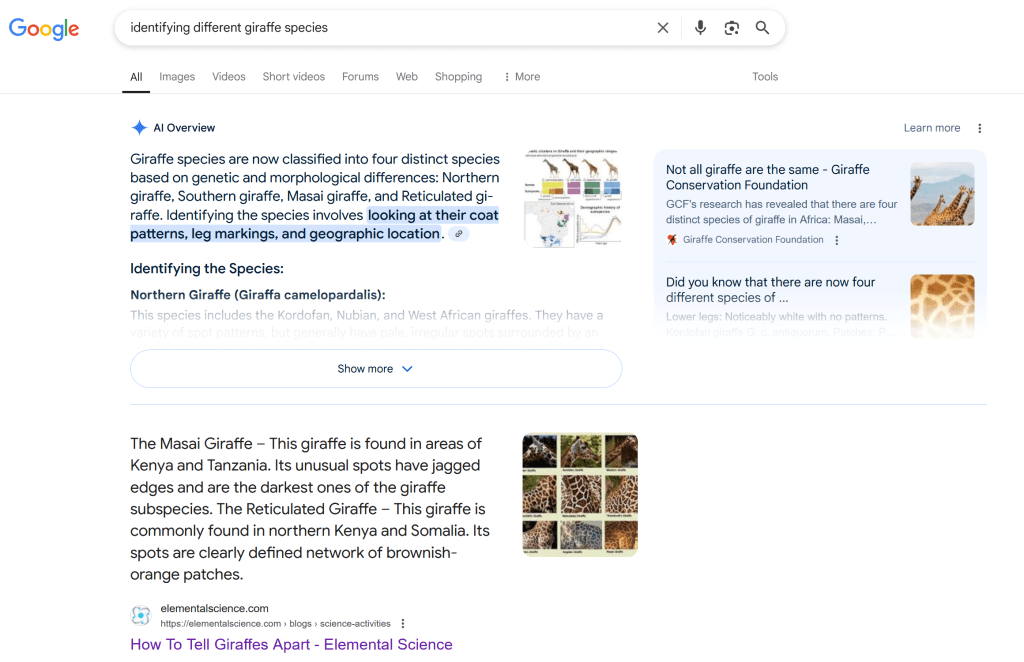
The next thing that I did was look for details of different species of giraffe:
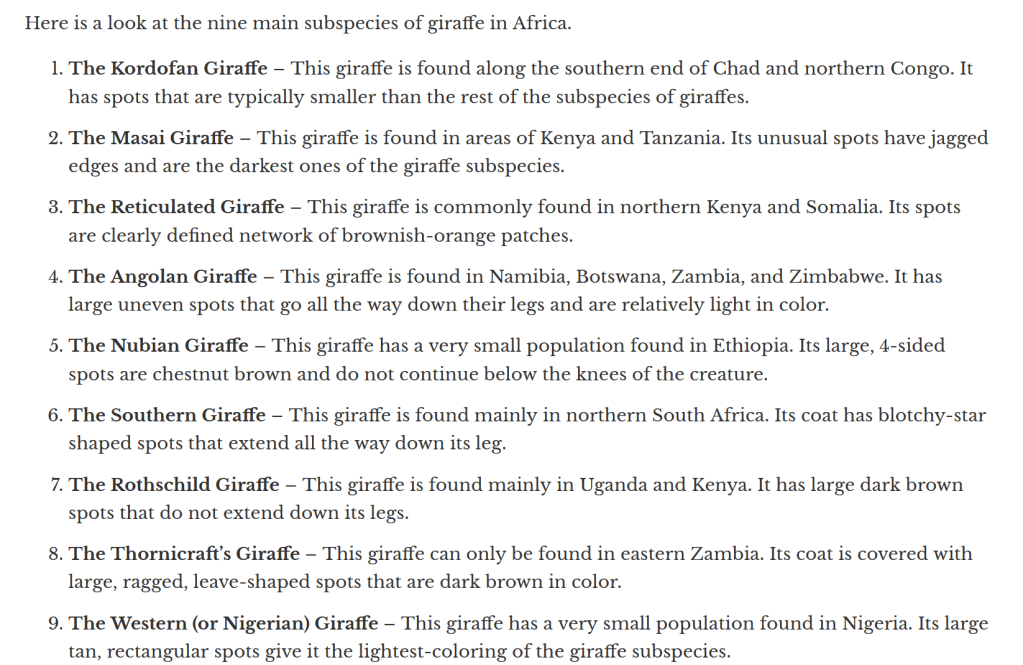
The elemental science page listed (https://elementalscience.com/blogs/science-activities/how-to-tell-giraffes-apart) provides some great information on the different species of giraffe in Africa:
Together with a helpful “giraffe decoder” diagram:
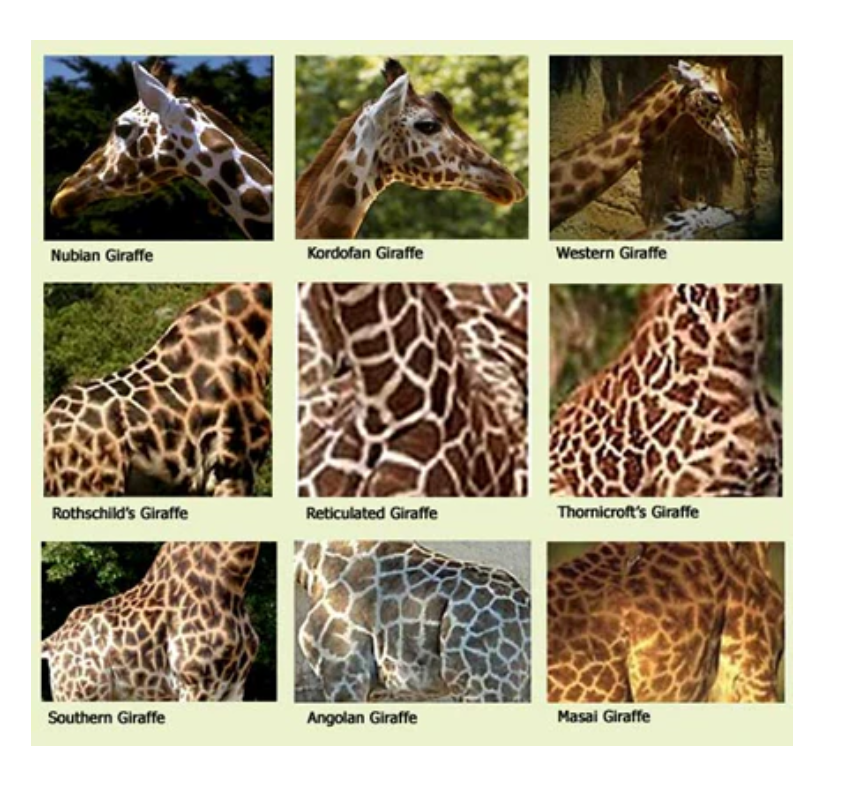
As noted above, from the wording of the challenge, it appears that we are looking for a giraffe species that has a single country for native habitat. If we limit to those in the list above with a single country habitat, this leaves us with just:
- Nubian (Ethiopia)
- Southern (South Africa)
- Thornicraft (eastern Zambia)
- Western (Nigeria)
If we now focus on the coats of the giraffe in the challenge image, we may be able to identify the species.
Looking at the coat of the giraffes in the image provided, the edges of the spots are not regular, they have quite irregular edges, and also have lines that head toward the centre of the spots.

The Nubian giraffe is described as having large 4 sided spots… so that would likely rule out the Nubian.
The Southern is described as having blotchy star shaped spots all the way down its legs… sadly not much giraffe leg is visible, but I would not describe the spots in the image provided as blotchy, so ruling this out.
The Thornicraft is described as having large ragged leave-shaped [sic.]spots that are dark brown. This appears to be a good description, so this is very much a possibility.
The Western is described as having large tan rectangular spots, so it likely it not this.
So, based on the spot pattern descriptions from above, the best option appears to be the Thornicraft, which is found in Zambia. This is indeed correct.
Solution: Zambia
Camouflage
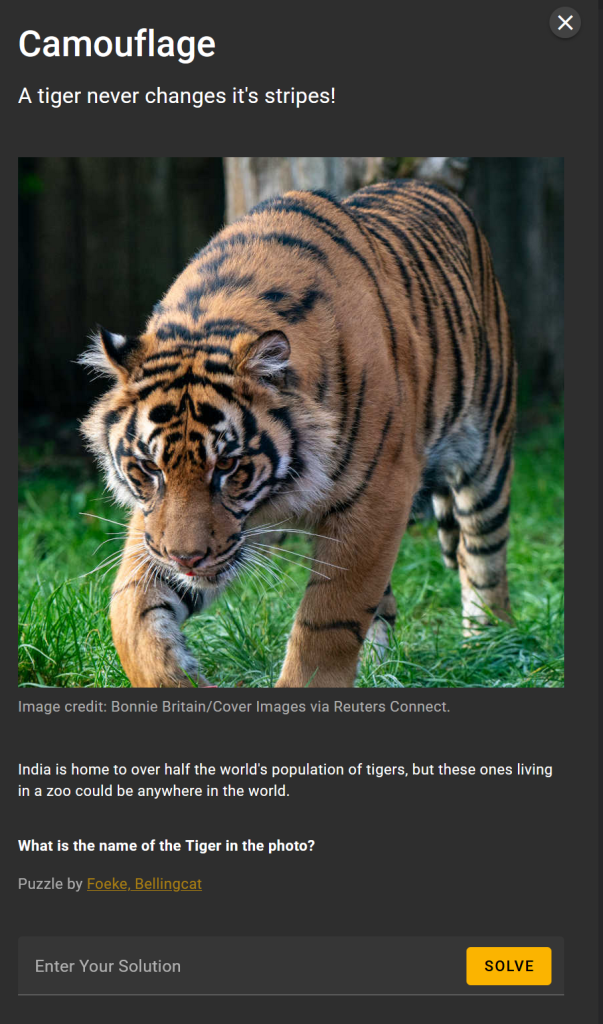
As I mentioned in the introduction, I enjoy photography, especially of birds and wildlife, and I have spent quite a bit of time at London Zoo. My immediate thought was that this could be London Zoo – I know that their Tiger enclosure (Tiger Territory) has natural type wood trunks and then wooden boards behind with a grass floor, as shown in one of my photographs below:

This looks similar to what we see in the background of the challenge image:
I could not be sure though, so decided to look for further confirmation and indicators that this was (or could be) London Zoo.
Looking at the image credit on the challenge, it lists an individual:

If Bonnie Britain is a photographer, they may well have an Instagram page. Running a simple Google query over the Instagram site, we can quickly find their profile:
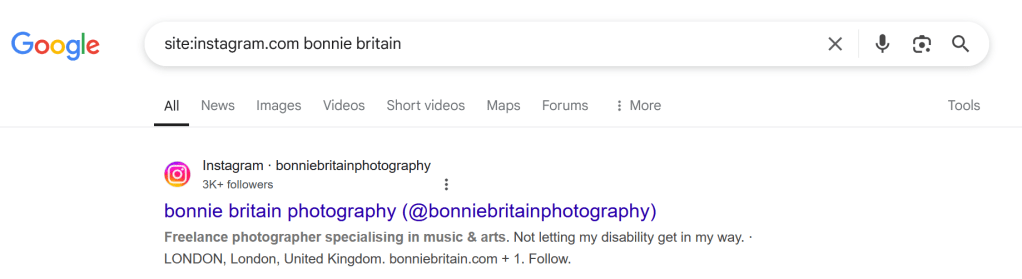
Immediately we can see information that suggests that Bonnie Britain is based in London, if we look at the profile page itself (https://www.instagram.com/bonniebritainphotography/) this is clearly listed:

I therefore decided to look further into the possibility that the photo is from London Zoo.
Running a Google search for Tiger across the London Zoo site quickly identifies a page about International Tiger Day:

The top of that page (https://www.londonzoo.org/plan-your-visit/events/international-tiger-day) looks like this:
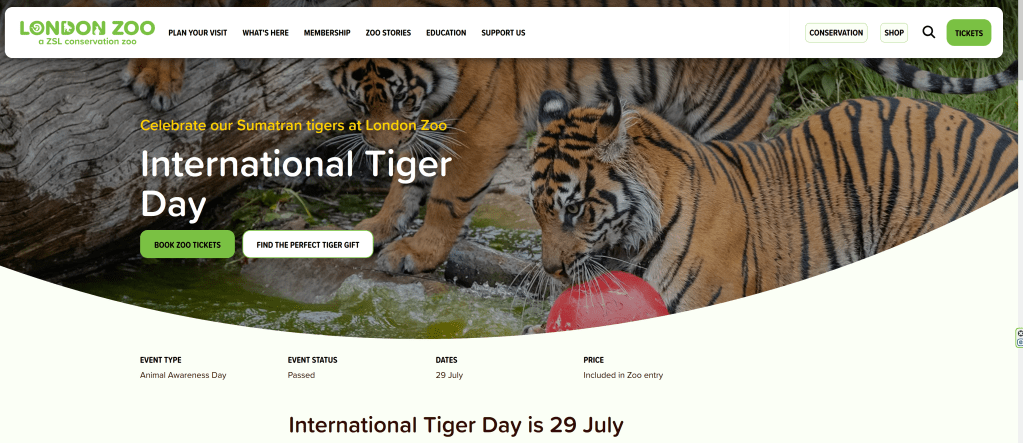
Looking at the tiger in the middle of the picture (above “London Zoo” in yellow writing), the marking on the head are remarkably similar to the image we are looking to identify:
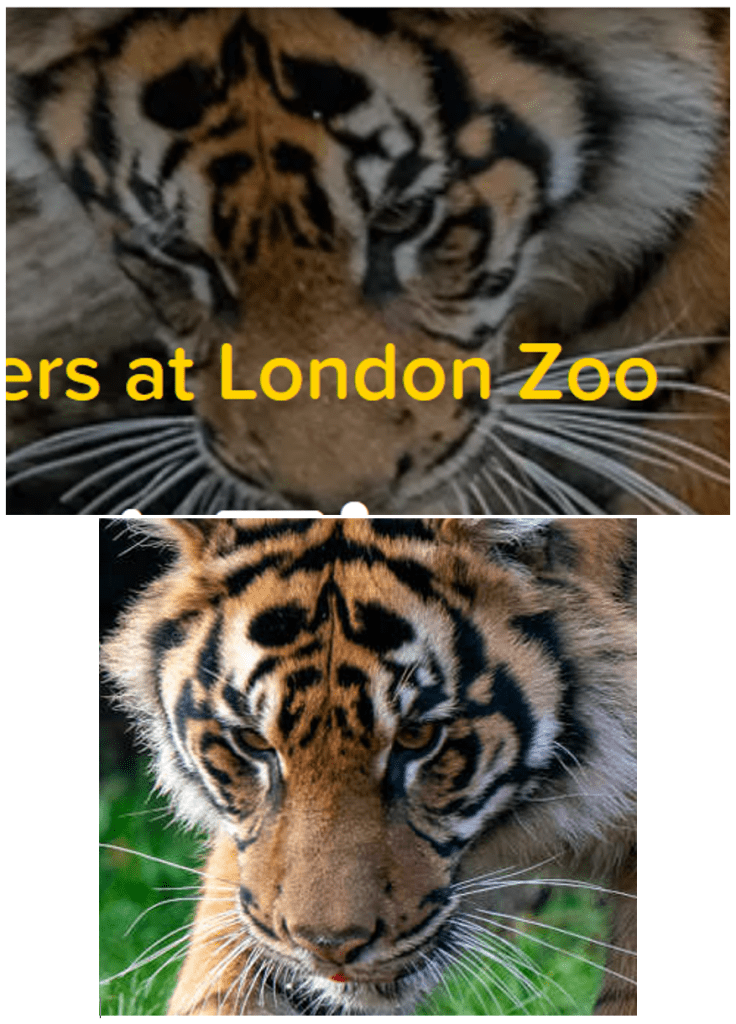
A deeper look demonstrates that the markings match. As the challenge states, a tiger never changes its stripes… the markings of tigers (and many other cats) do not change over time and are regularly used to identify them. The challenge image therefore appears to be a photograph of one of the tigers at Tiger Territory at London Zoo.
The International Tiger Day page also includes the full photo and more description:

So, we have the names of all the tigers – Gaysha, Asim, Zac and Crispin. But which tiger do we have a picture of?
The page also includes a link to “Our Tiger Family”:

Following this link takes you to the main Tiger Territory page (https://www.londonzoo.org/whats-here/habitats/tiger-territory). The page includes a picture of Zac and Crispin as cubs.
The photograph of Crispin is below:
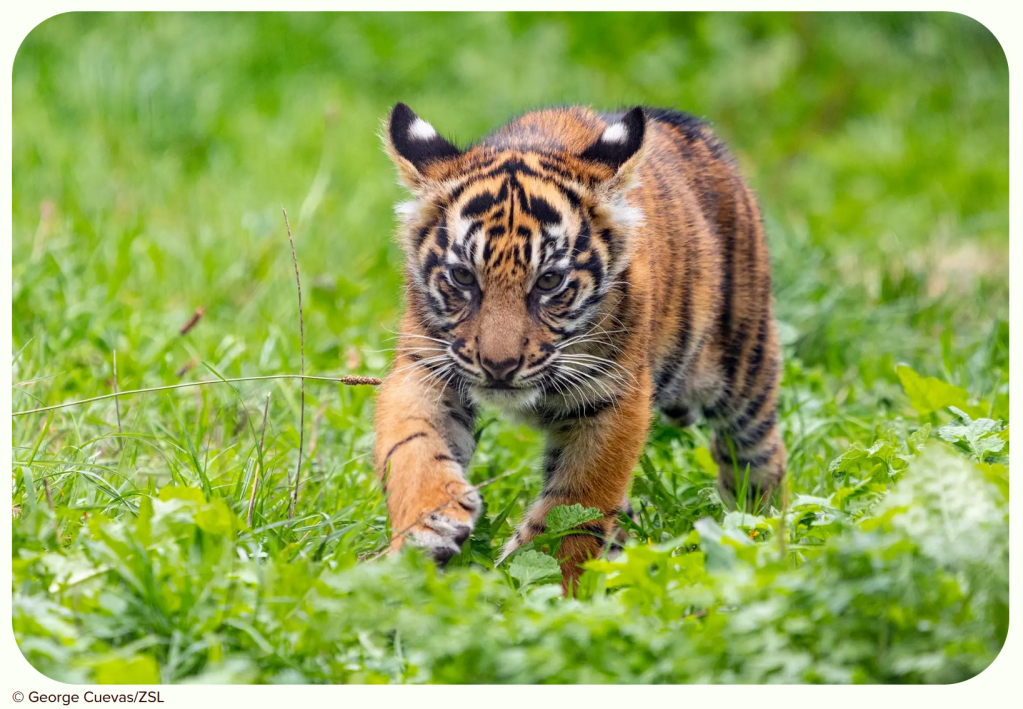
Note that the marking again match those in the challenge image:
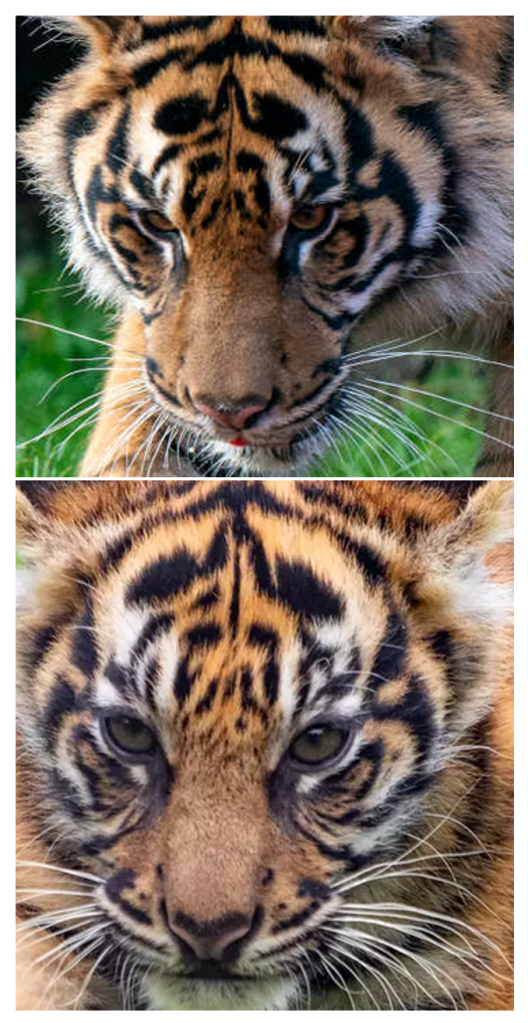
We appear to be looking at an image of Crispin.
Solution: Crispin
Hopping Around

As with the Camouflage challenge above, the image credit here gives us some key information. The image came from Google Street View (so we will likely need to use Google Street View to find a match), and also that the image is dated 2015.
The image looks like it may well be some sort of parking area, clearly there is a pylon or tower type structure of some sort surrounded by fencing. The wooden fences suggest that this could potentially be near a lookout or view of some kind (which would explain the parking).
I started off looking for some quick matches on Google Images, but didn’t find much of use. I moved on to look for some indicators on potential areas. Based on the soil, trees etc. good options might be Southwest US, Mediterranean and Australia.
I ran some fairly simple OpenStreetMap searches (https://osm-search.bellingcat.com/) based on the observations above… for example:

and
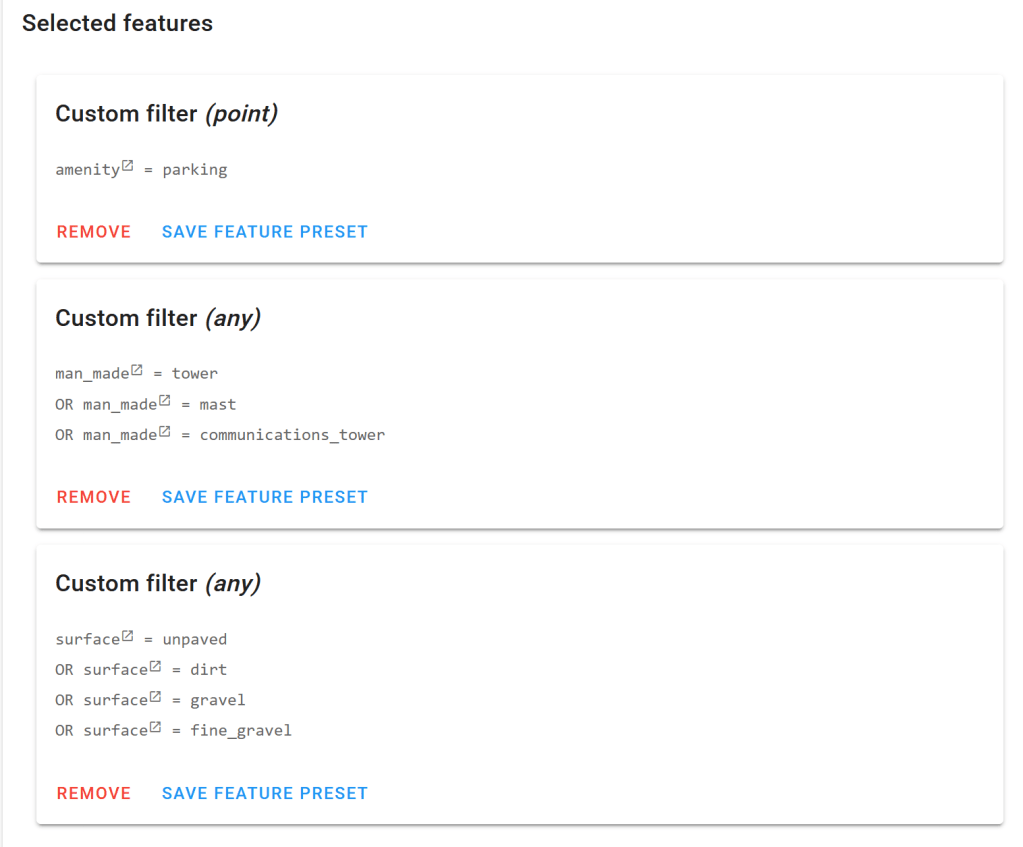
Running these over some of the suggested potential areas. I found a few possible locations like the below in Spain near Luzech:
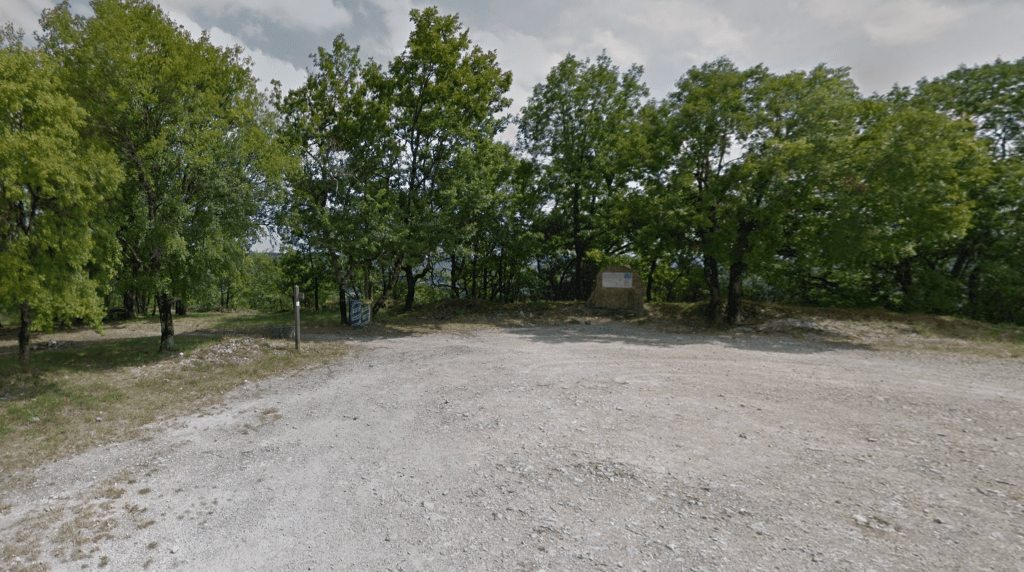
And the below in Australia (though the trees etc. don’t match):

I didn’t feel that I was getting anywhere, so shifted approach, and went back to some more Google Images, where I did find the below:
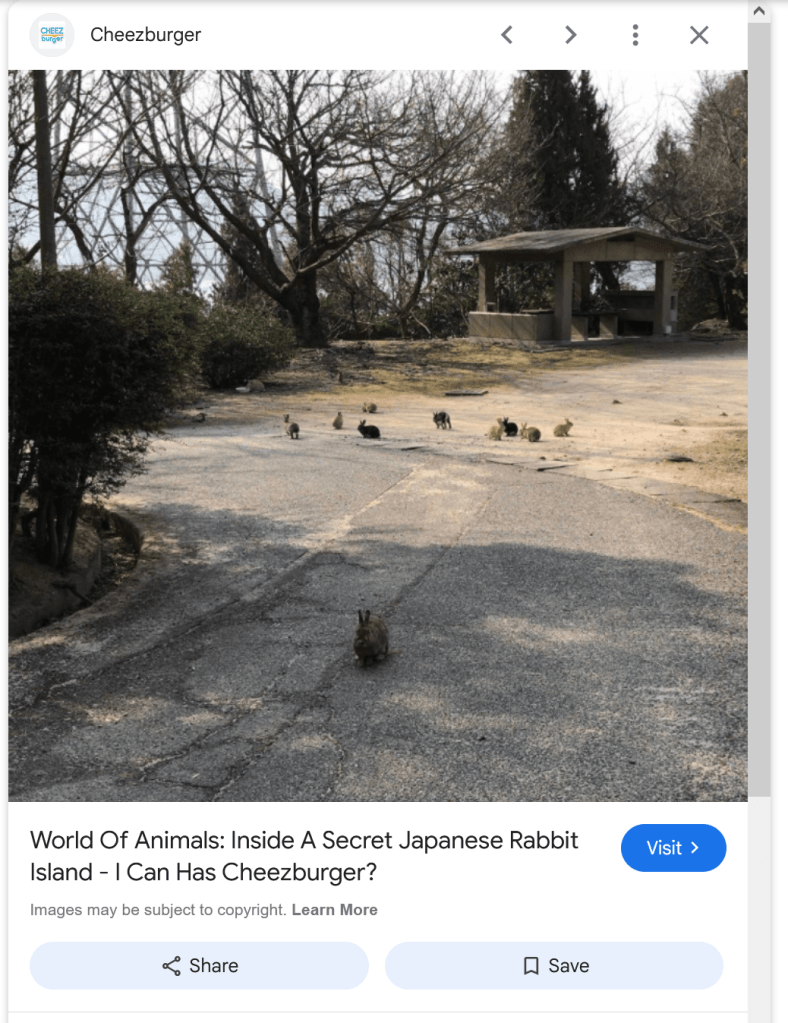
This could be a potential lead, especially as there are clearly plenty of rabbits.
Following the link (https://cheezburger.com/15482117/world-of-animals-inside-a-secret-japanese-rabbit-island) we find that the rabbit island is in fact Okunoshima Island, in Japan.
Finding the island on OpenStreetMap, we can see that it is fairly sparsely populated (from an information perspective):
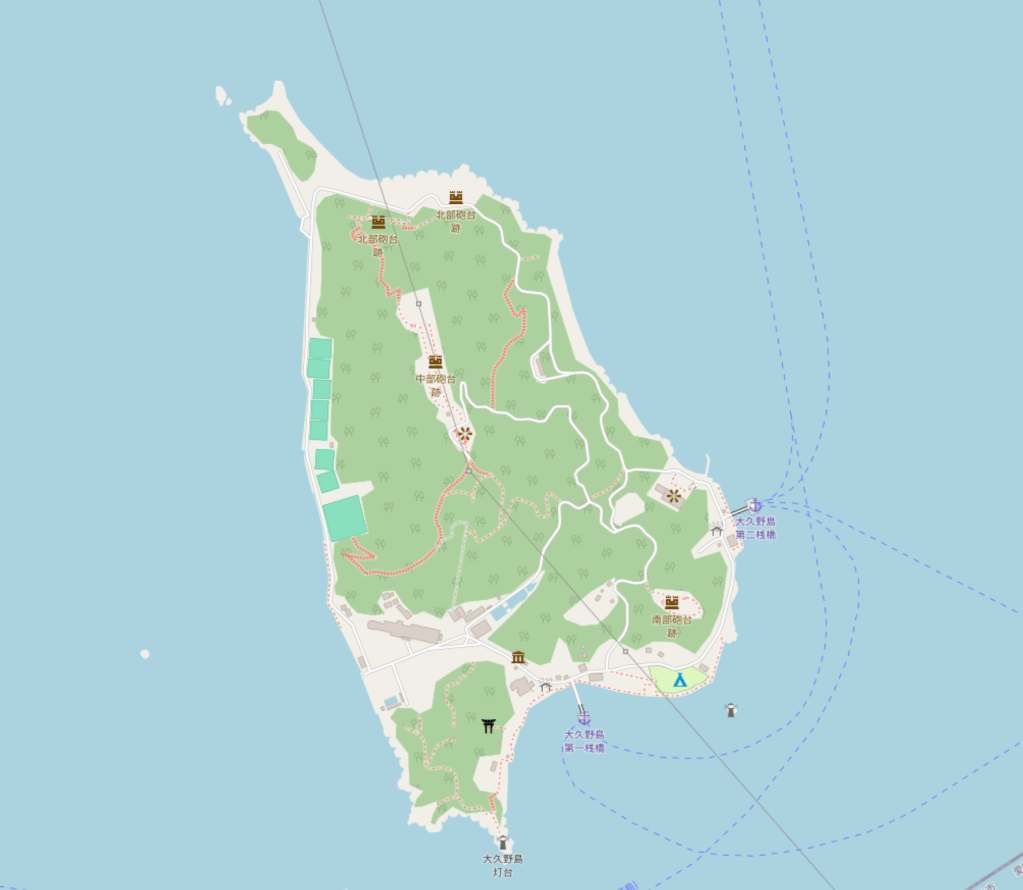
We can see a viewpoint near the middle of the island, so I decided to use Google Street View near that location and see how it looked.
I was quickly able to find a pylon near that location, and a rabbit… though sadly not the right one:
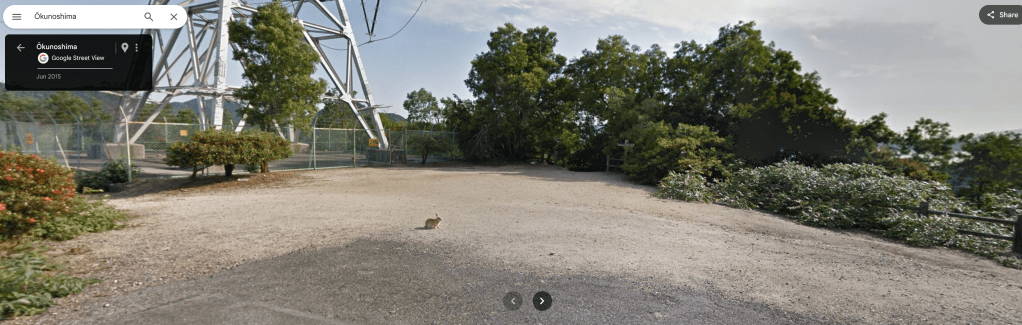
The details here look similar to those that we are looking for, especially the wooden fence on the far right hand side of the image which looks like a good match to the fencing in the challenge image. I also noticed the date of the Street View image:
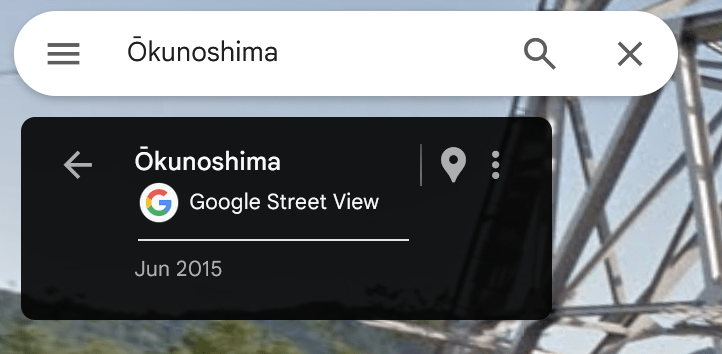
This image is from 2015, the same year as the credit for the image we are searching for. Given the similar details and the match on Street View image dates, I decided to dig further.
I tried to follow the power lines to look for other pylons in the same area.
I was then able to find the below:
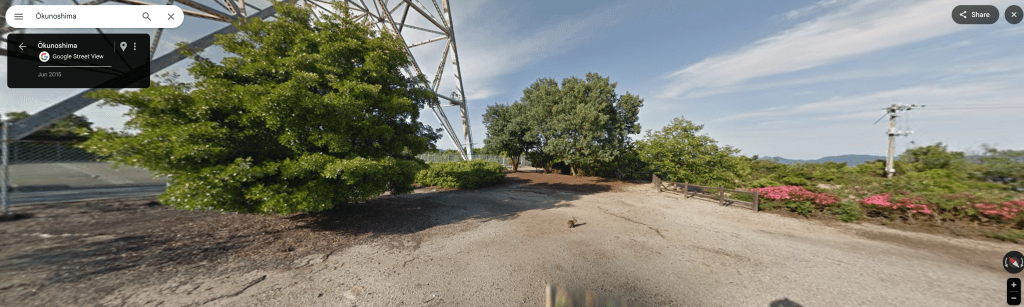
This is a match with the image we are looking to locate:
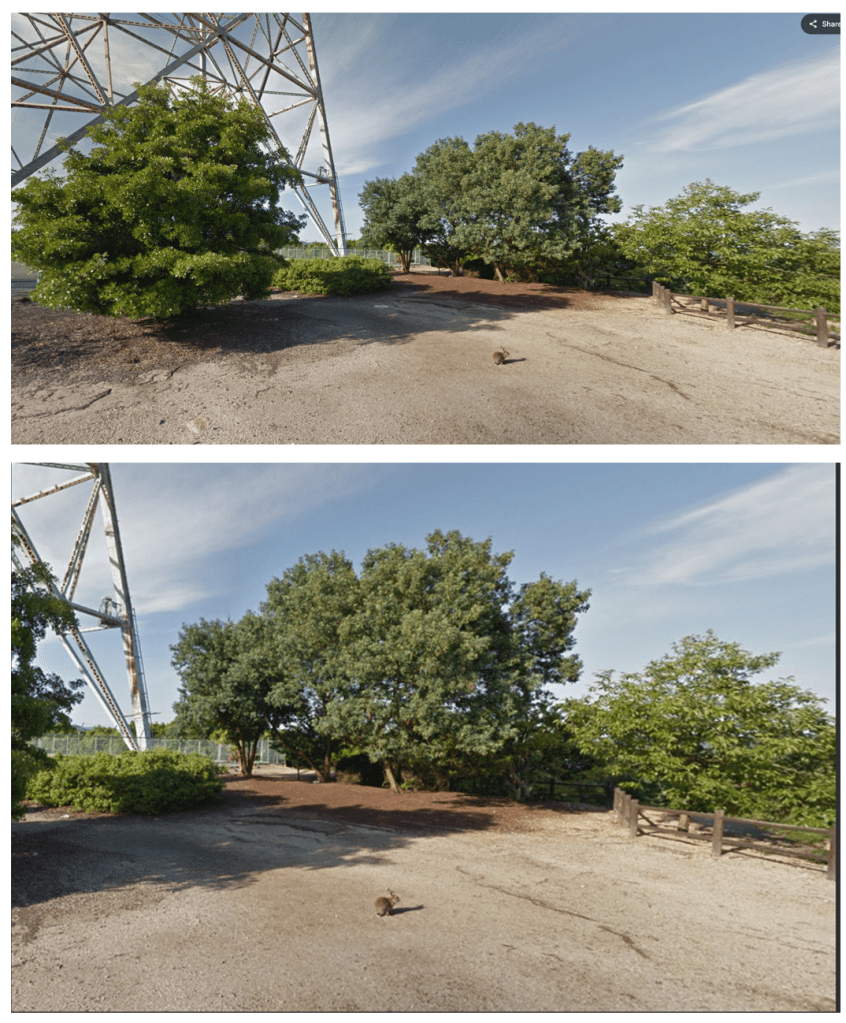
So now we just need to find the latitude and longitude.
This is supplied easily by Google Maps, as the address contains the latitude and longitude values that we need.
Taking the URL from Street View, it starts: https://www.google.com/maps/@34.3116065,132.991995,…
This last section above contains the latitude and longitude values. We want the first three decimal places of these (with rounding!).
Solution: 34.312, 132.992
A Proud Creature
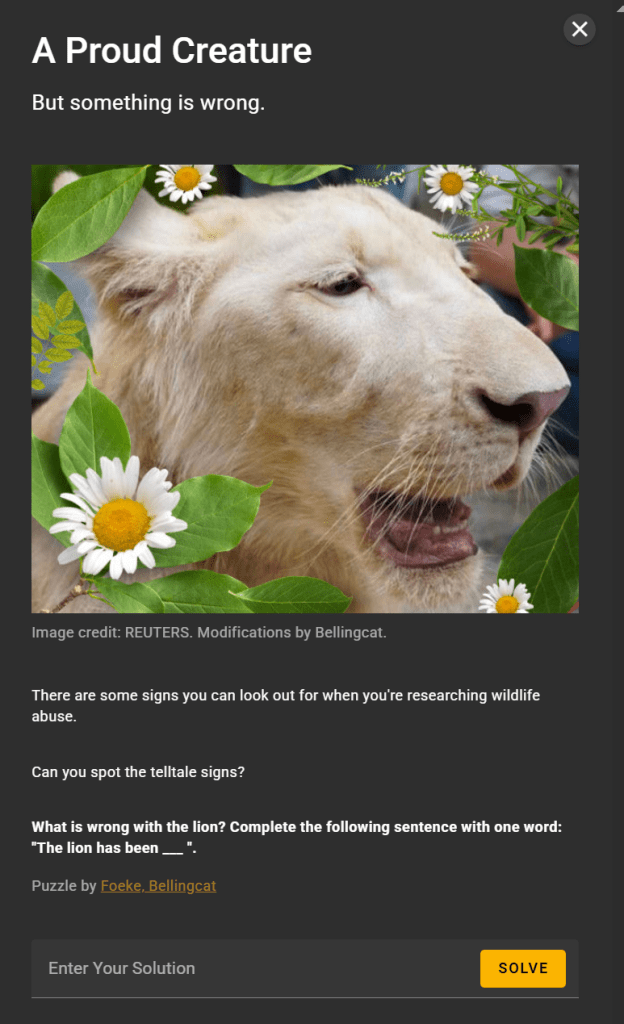
This challenge didn’t require any research or searching, I was able to put the answer in straight away. This may be because of my personal interest in wildlife and support for charities who support animals that have been mistreated etc.
From the image, I could immediately see that the lion has been defanged. The large canines that should be present are not. For comparison with the challenge image, see below one of my pictures (this time from Hertfordshire Zoo – formerly Paradise Wildlife Park).

Defanging is a painful process (I dont think many of us would enjoy having our teeth removed) and is often carried out with no pain relief for the animals. Along with declawing, defanging is an attempt to make lions “safer”. This can often be linked to places offering tourist “experiences” such as walking with, or petting lions.
For more information on the dark side of lion tourism, you can find information here – https://www.worldanimalprotection.org/latest/blogs/dark-side-of-cruel-lion-tourism/
Solution: defanged
Lazy Lions
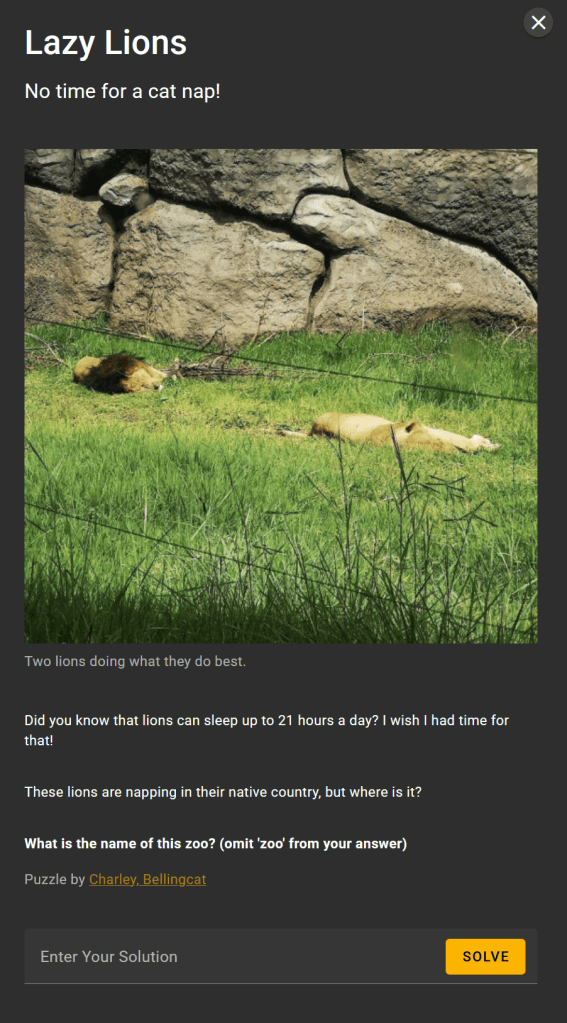
The rock formation in the image is quite specific. I used Google Images, specifically focussed on the rock structures and got no useful responses. Some people said that they used Google Images and the result came up straight away for them, so there may be some differences in how Google Images is running for different people, or you may have to have exactly the right selection to get the relevant response to be apparent.
Similar to the first challenge (involving giraffes) we are looking for a native country for a specific species. Rather than start digging into lions and subspecies as a first step as I did for giraffes (for reasons that will become apparent later) I started by looking for some image matches, or looking at the larger zoos in countries where lions are native.
Using ChatGPT, I tried to narrow down to find some good zoos to take a look at first.
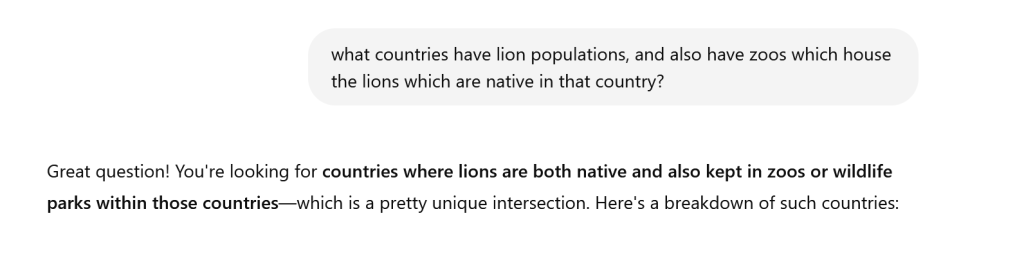
ChatGPT gave me a long breakdown, with a useful summary at the end:
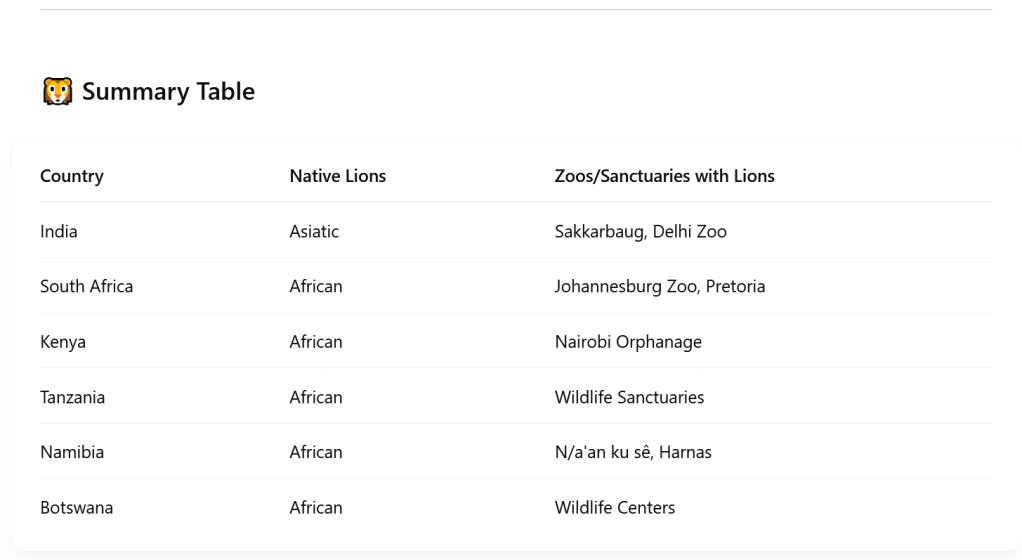
From the wording in the challenge, it seems sensible to assume that the name of the zoo that we are looking for includes “zoo” (“omit ‘zoo’ from your answer”).
I decided to start in Johannesbesburg, as I know that zoo is quite large.
A Google search for Johannesburg zoo lions identified a video of the lions at Johannesburg zoo:
https://www.facebook.com/reel/2076199482827158
A still from the video is below:

Note the wire fence in the image – there were also wire fences in the image we are looking to locate. We also have some rock structures here, though nothing that directly matches.
Interestingly, Johannesburg zoo is on Google Street View:

Finding a map of the zoo (https://www.themeparkbrochures.net/johannesburg-zoo-map/#johannesburg-zoo-map-2020), I could then locate where in street view I wanted to be looking.
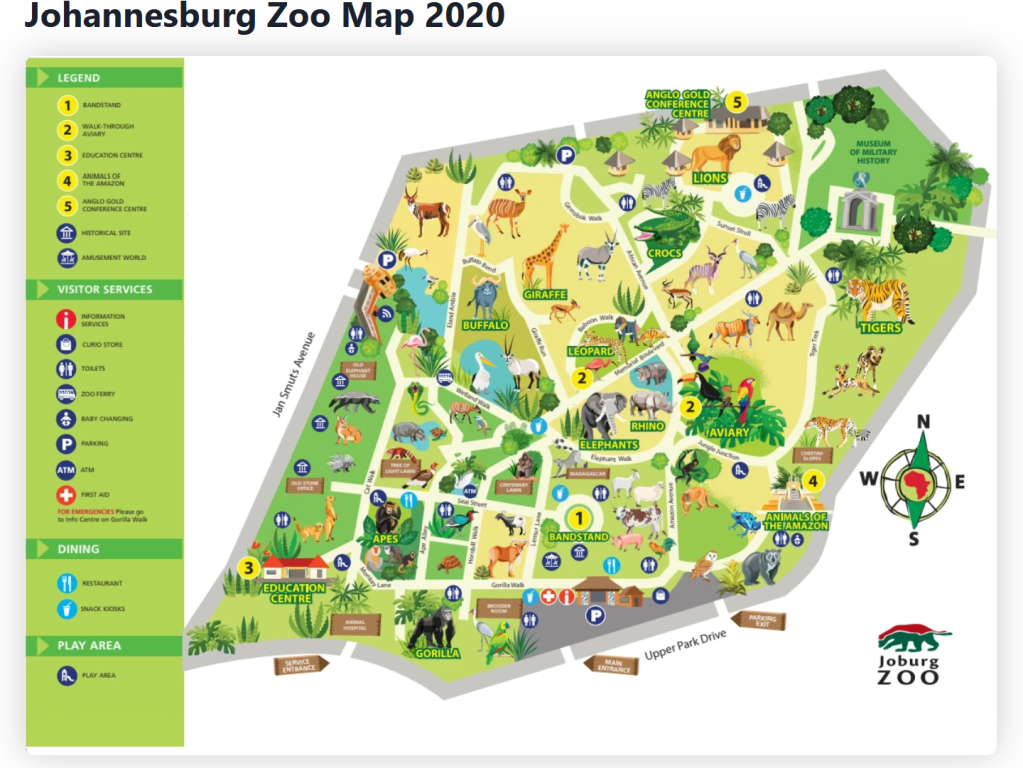
Using streetview, I looked around the lions area, but there were no rock formations that matched what we were looking at, there was just nothing the sort of size that we are looking for:

Though the lion in the above image does not have the dark mane that we are looking for, there are actually several island areas, with three different prides (see for example https://www.instagram.com/p/DBbAFH5qJiP/).
Having no luck with Johannesburg, I had a quick look at some of the other main listed, but still found no likely matches.
I decided to go back to doing some searches and trying to use ChatGPT to tie together some information based on the very dark mane that the lion clearly has in the image:
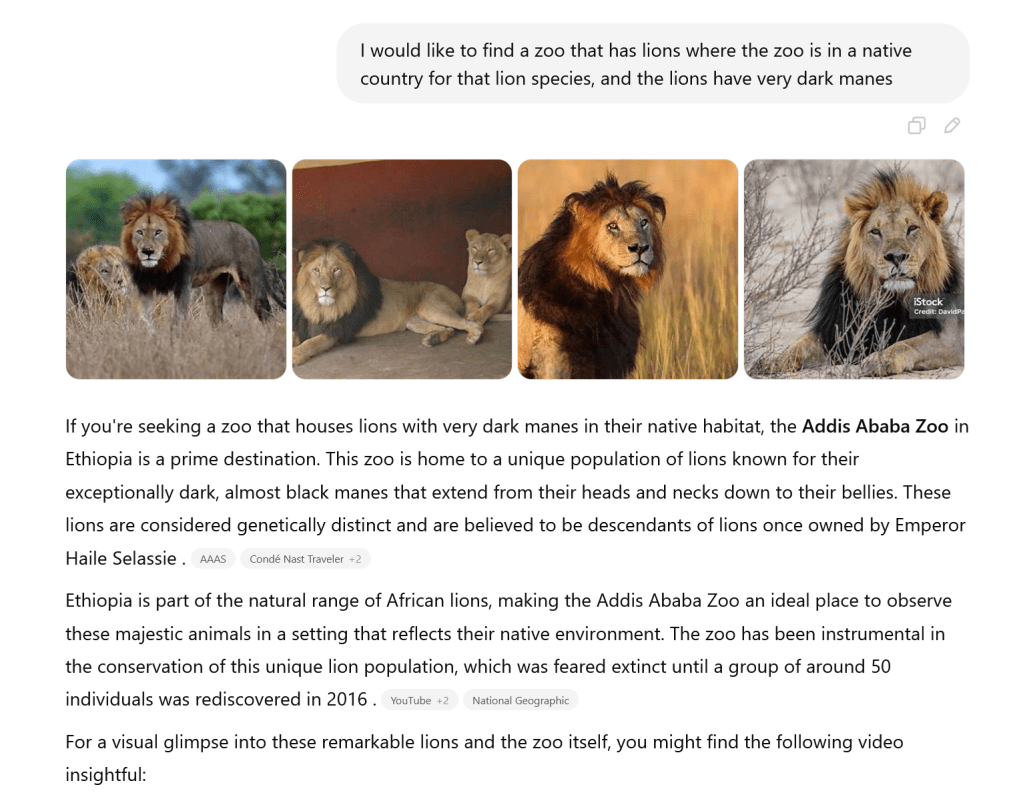
Searching for Addis Ababa Zoo in Google Maps immediately takes you to Unity Park Zoo:
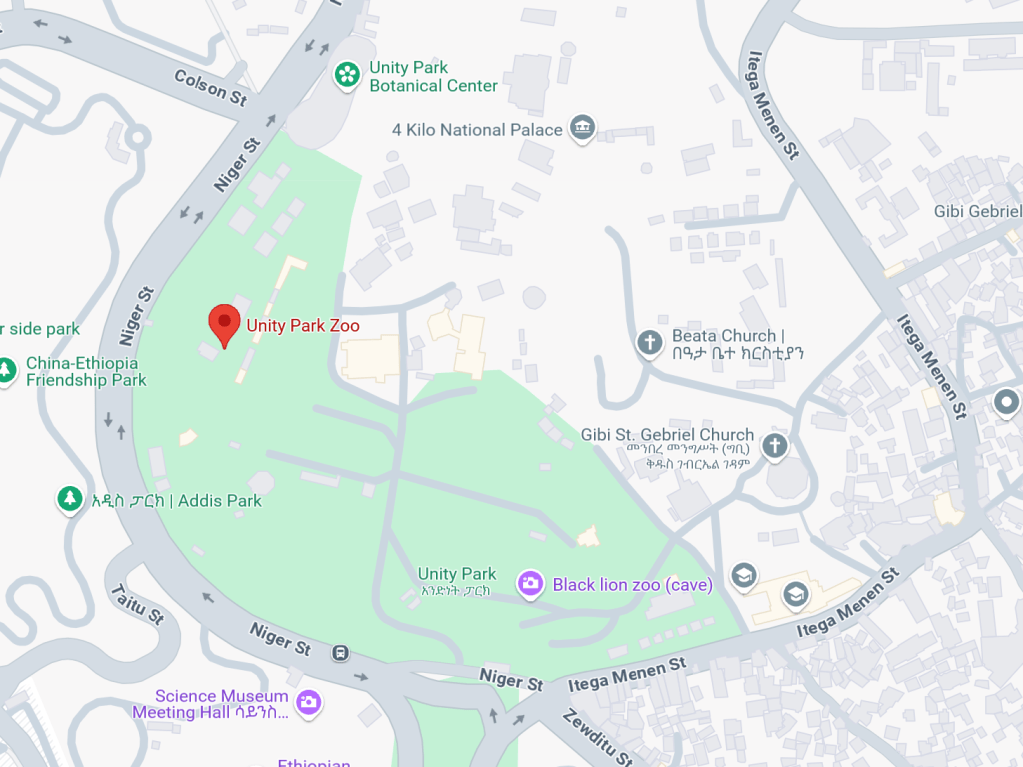
Here we can see a specific entry for Black lion zoo (cave).
Searching for black lion zoo cave I was able to identify a video – https://www.facebook.com/watch/?v=855181662317199
A still from the image is below:
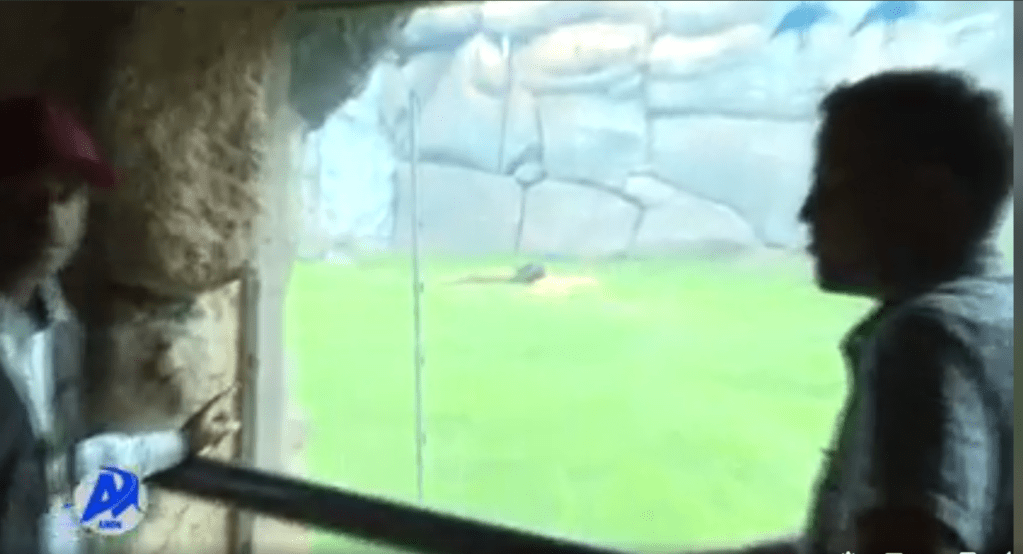
This rock formation looks familiar! Comparing this to the challenge image:

Zooming into the video, you can also see wire fencing, as it is present in the challenge image:
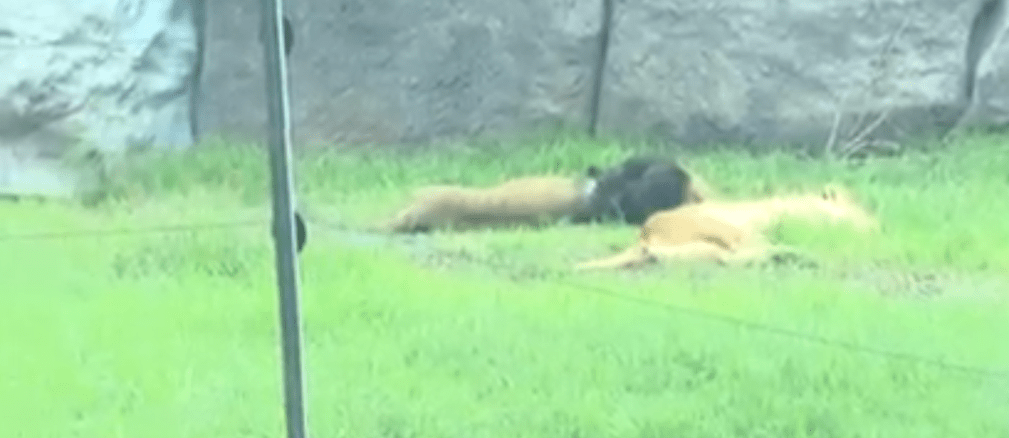
This is the right location, though it took me a few attempts to get the wording correct, as for locations we have Black Lion zoo cave, Addis Ababa Zoo, and Unity Park Zoo.
Solution: Unity Park

 The eDiscovery Channel
One thought on “Bellingcat Challenge – April 2025”