
By Dr Tristan Jenkinson
Introduction
The August Bellingcat Challenges were all related to the identification of explosive ordinance. Key amongst the resources to consider were the article previously published on a beginners guide to the topic – https://www.bellingcat.com/resources/how-tos/2024/07/31/a-beginners-guide-to-identifying-explosive-ordnance-in-social-media-imagery/.
The challenges were all put together by Andro Matthewson (author of the above article, currently at the Centre for Information Resilience) and Kate Millar (who was previously at the Centre for Information Resilience).
Before we start, I would like to reiterate the opening information from Andro Mathewson’s article:
“Explosive ordnance (EO) are extremely dangerous. Never approach them unless you are explicitly trained to do so. When posting about potentially explosive objects online, do not encourage others to interact with them. If you come across any potential EO, call the police or other relevant authorities.”
Thankfully, we don’t have to get close up and personal with any of the devices for the purposes of the challenge.
Let’s dive in.
Failed to Detonate

I immediately went into the beginners guide article, and used the visual guide there as a starting point.
The item in the challenge image looks conical to me, and clearly has a screw closure.
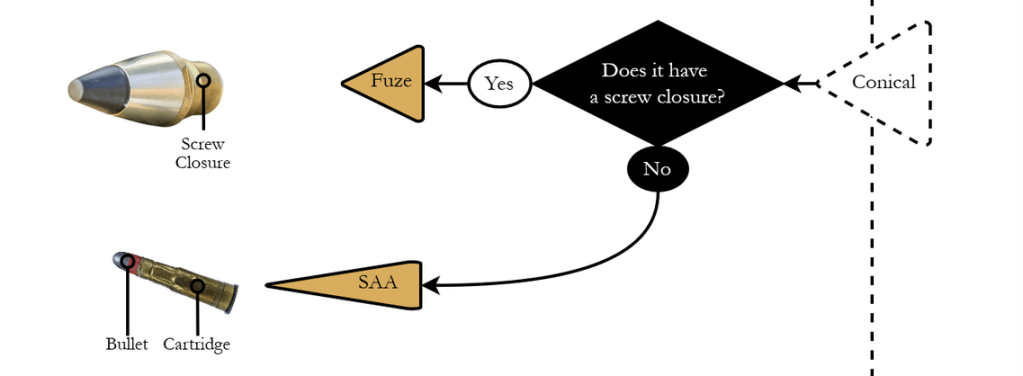
It sounds like we are dealing with a fuze.
There is some text present… so my next step was to see if I could get that translated. I tried this in ChatGPT:

I was not convinced that this was entirely correct (those who have seen me talk on the subject or read previous write-ups will understand that I never trust ChatGPT to be correct), but there is some good information here. We now have a potential name, number, and Chinese characters. Based on the beginners guide, we also know are looking for an artillery fuze.
I decided to follow up on the Chinese angle, and ran a Google search.

I found the below image:
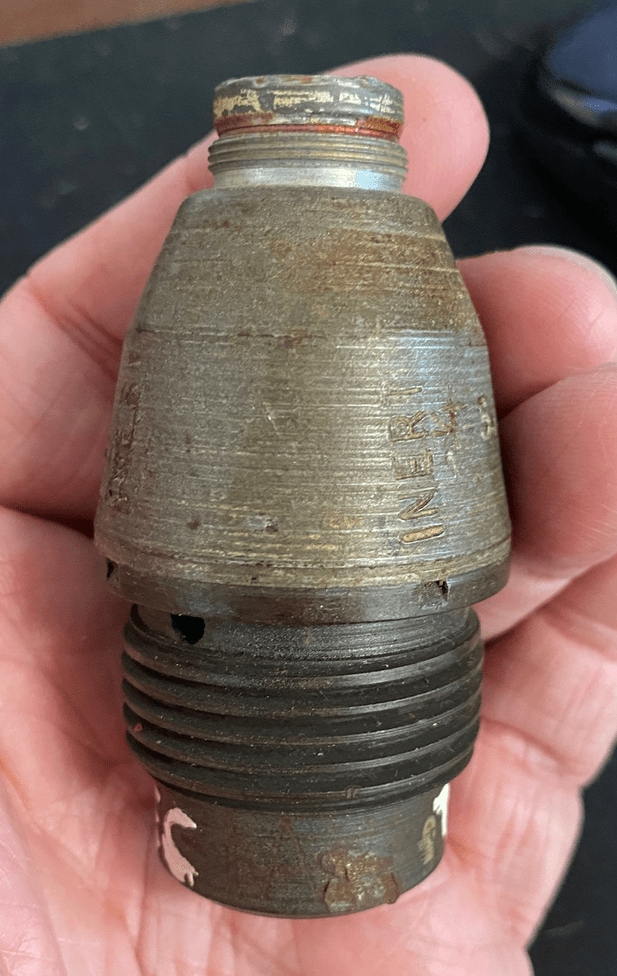
The link for the image led me to a page attempting to identify two different Chinese projectile fuses
https://forum.cartridgecollectors.org/t/identification-of-two-chinese-projectile-fuzes/57587/2
The discussion includes the below:

This looks very similar to the fuze we are trying to identify. For comparison:

I then used ChatGPT to translate the text from the cutaway diagram:
ChatGPT reports that the title reads 无—2 式引信 which translates toWu-2 Type Fuse.
The text below the schematic apparently reads as below:
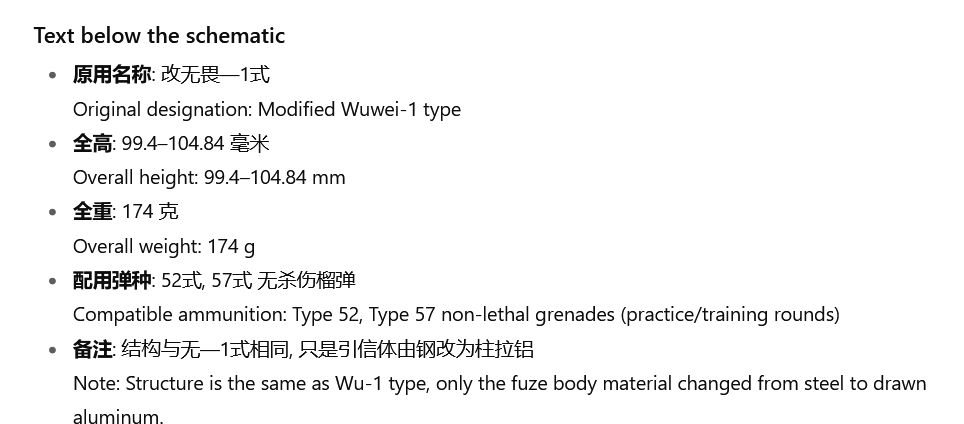
So this diagram is for the type 2 fuse. However, as the note at the bottom says the structure is the same as the type 1, but the type 2 has aluminium instead of steel.
The original image is corroded, and appears more likely to be made of steel than aluminium (which corrodes differently). Also recall that ChatGPT identified the number one in the text.
I believe that this is therefore a Wuwei type 1 fuze.
The challenge says it wants the model and the category. The category we have from the Bellingcat article – it is a fuze. The model is type 1.
Solution:Type 1 fuze
Small But Deadly

I put the challenge image into Google Search, and immediately get a result on Wikimedia:
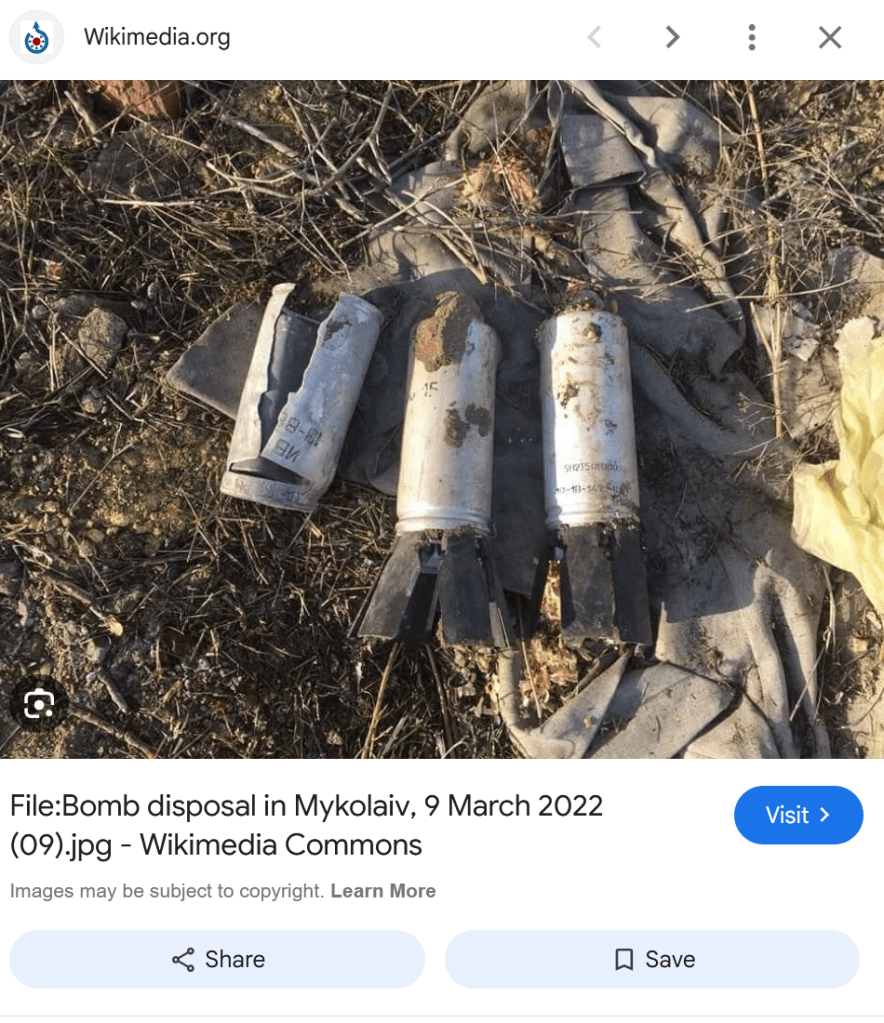
The description here is split into sections, Russian, English and Ukrainian:

The English section reads:
“…during Russian invasion of Ukraine. Servicemen of the Emergency service of Ukraine dispose explosive objects. During the day, 14 objects of ammunition were removed from residential areas, including 3 air-dropped bombs FAB-250, cluster bomblets and various shells. 9 March 2022.”
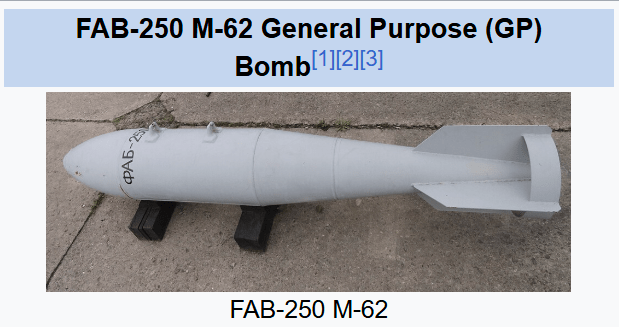
Following the link to FAB-250 – you can see that these are not a match, so this listing provides a limited amount of information… though it does link the challenge image to potential use in Ukraine.
The Bellingcat article by Ando links to the Bomb Techs Without Border’s Basic Identification Guide to Ammunition in Ukraine – https://www.btwob.org/updates/basic-identification-of-ammunition-in-ukraine-version-40 (and then https://ukr.bulletpicker.com/id-guides.html)
Based on the above, this challenge appears to relate to ordinance used in Ukraine, so could we use this guide to assist?
I found this entry in the guide.
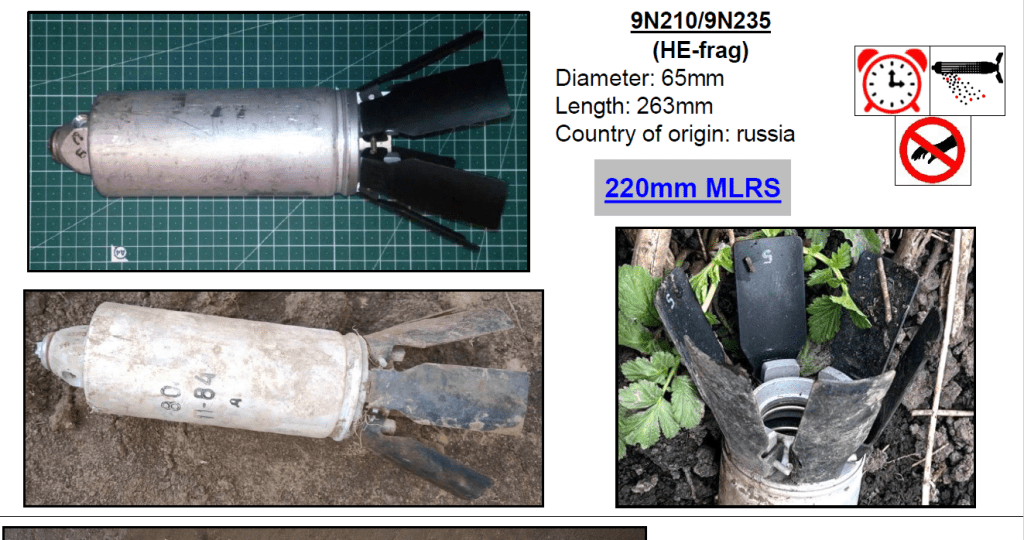
These appear very similar in design, and have the black fins 9N210/9N235
Searching for 9N210 frag I found another similar image to our examples:
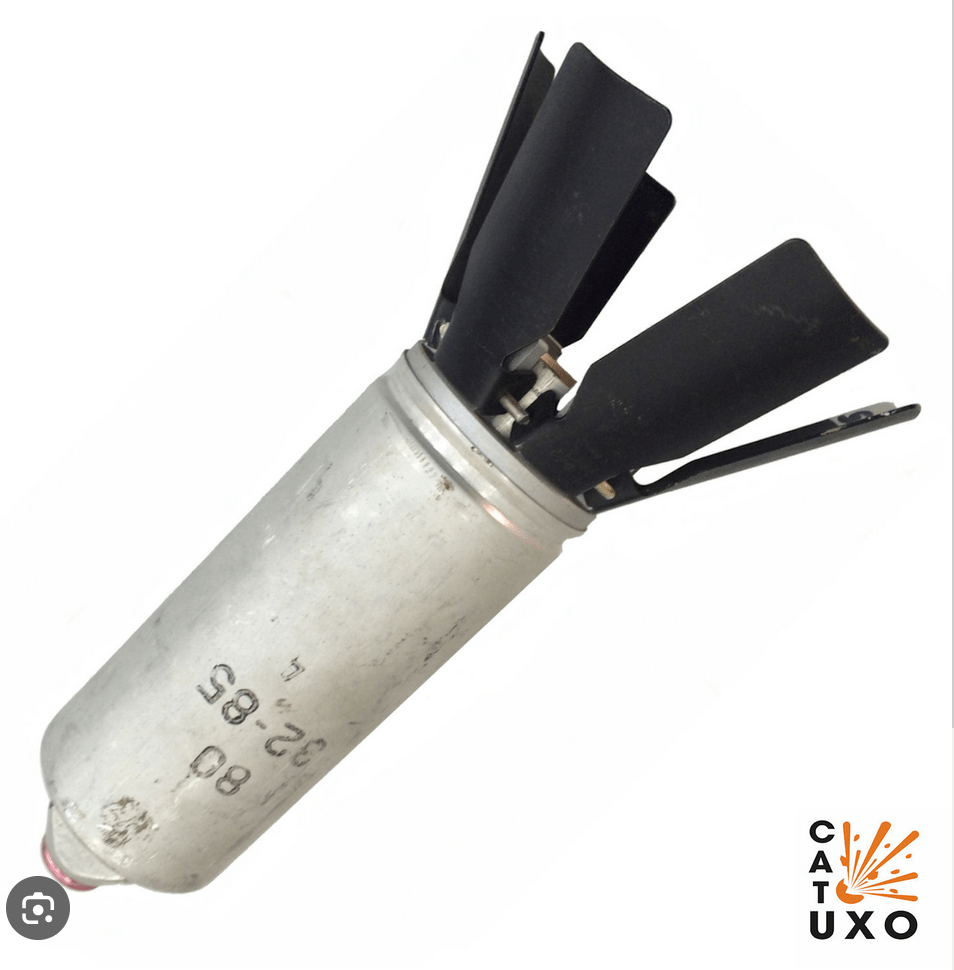
https://cat-uxo.com/explosive-hazards/submunitions/9n210-submunition
This is a very close match, including the red cap that we see on the example on the right hand side of the challenge image. This website provides additional information:
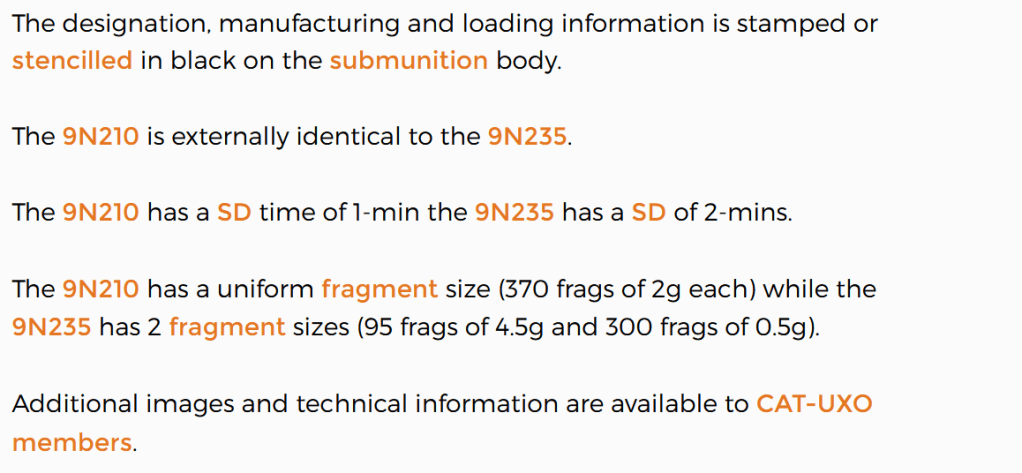
So the 9N210 and 9N235 have the same external features… and should have the designation stamped on them.
A similar image, from the same website, shows the 9N235:
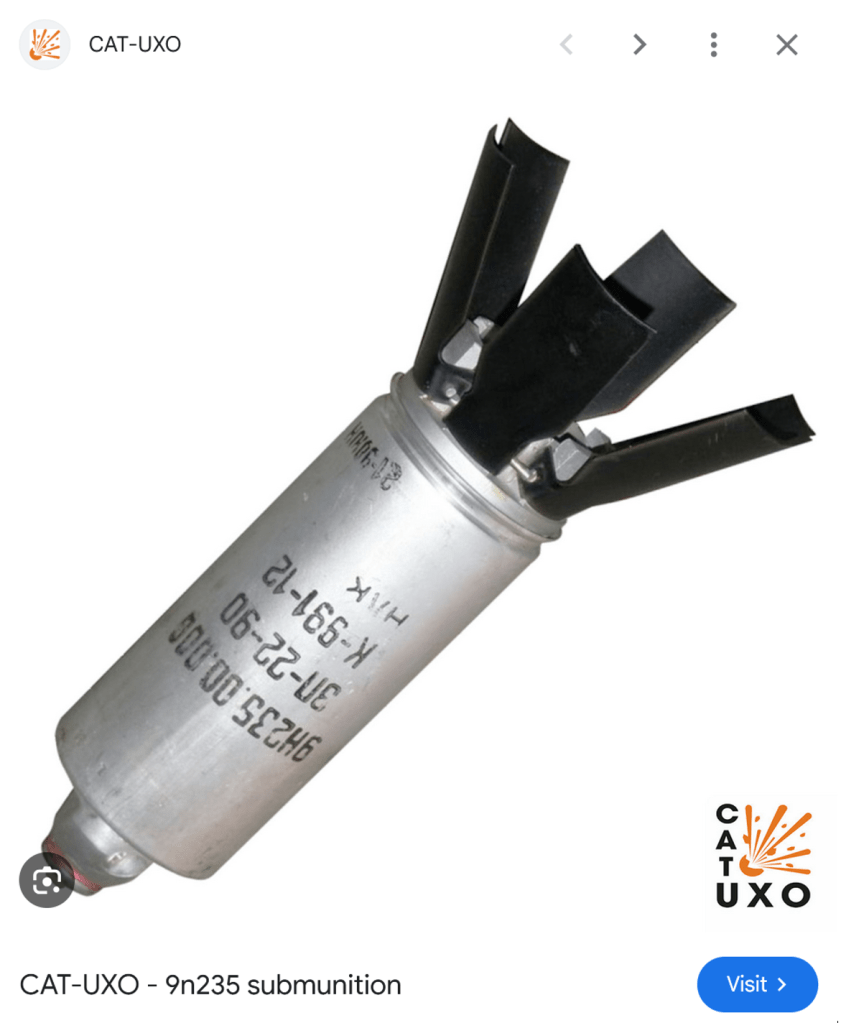
If we look closely at the challenge image, and the item on the right

This looks like it may start 9H235, though the common transliteration of H is n. This is why in the image above of the 9N235 (from CAT UXO), the writing on the casing reads 9H235…
Therefore, based on the similarity to 9N235 examples, and the apparent labeling as 9N235… I believe that this is a model 9N235.
Solution: 9N235
Among the Roots
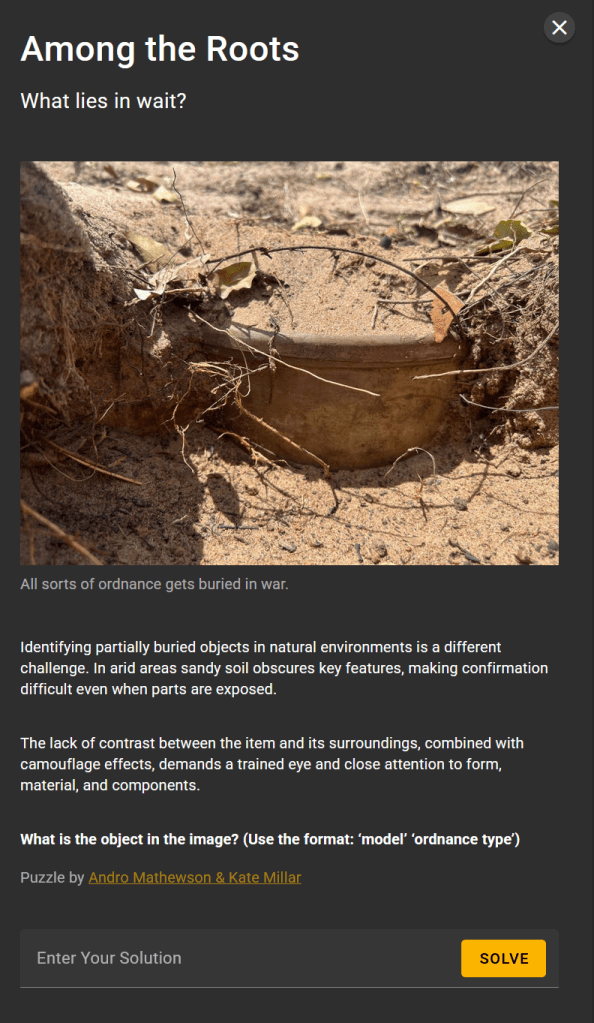
Back to the Bllingcat beginners guide, this (unsurprisingly) appears to be a landmine based on the flat cylindrical shape:

In the image, the item also appears to have been buried in some sort of natural step – so that would make it more likely to be an antipersonnel landmine, as opposed to an antitank mine etc.
From the Bomb Techs Without Border’s guide, I found this:

Which has a similar rim, and is entirely flat, as the challenge item appears to be.
Most other antipersonnel landmines do not have the same physical setup.
Solution
PMN landmine
Target Not Acquired

I went straight back to the Bomb Techs Without Border’s listing of munitions used in Ukraine. Under 40mm projectiles I located the below, which, if we then If we zoom in and rotate the challenge image (below), we can see is a relatively good match:

We can match the three sections of the top of the grenade (blue), as well as a small round opening which is located in the same place (red), and a metal cap on the very top (yellow). We also match the regular shape with straight sides, and the regular bands around the main housing of the device. It does look like the main housing may be made of a different material.
This is a close match, however, it was not the answer that we were looking for.
After further review, I found a similar model, the VOG-25PM that has a better match for the main body:
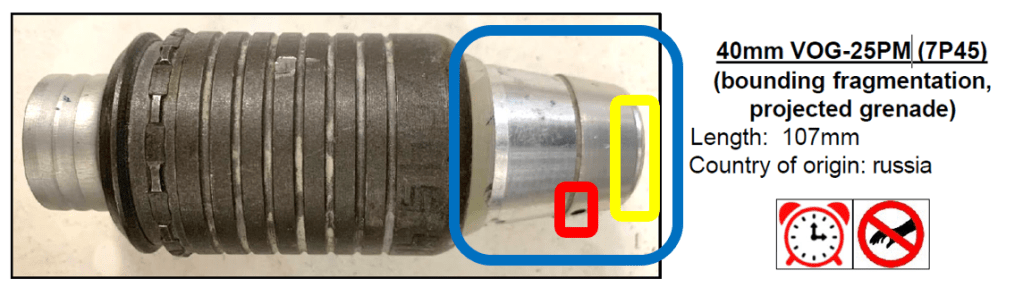
Here we can see we match the cap, the small round opening, as well as the three sectioned top, and we also have a banded, straight sided main compartment which appears to be much closer to the original material.
This is the item that we were looking for.
Solution:VOG-25PM
Larger Than you Think
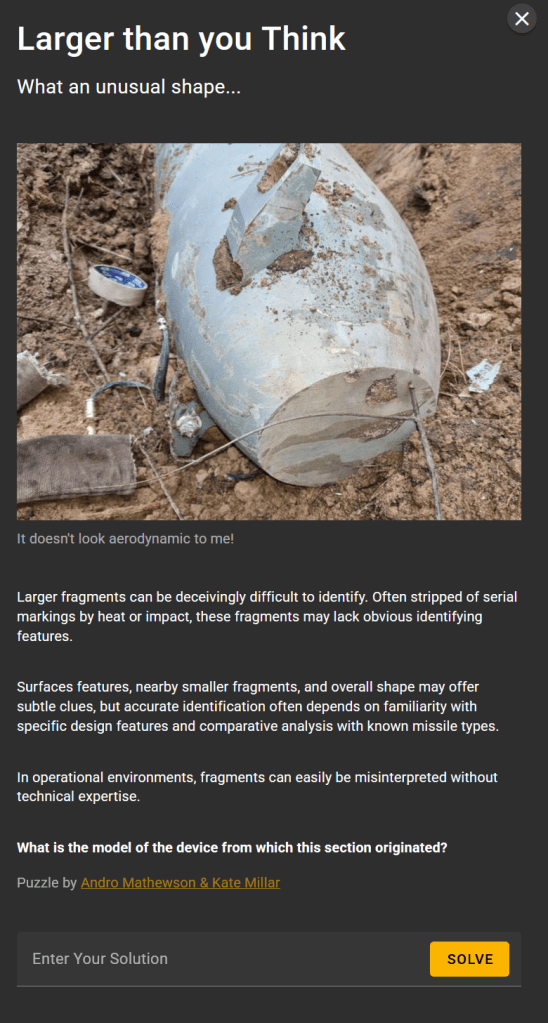
There are a few features to pull out here. On the left of the main object, below the sellotape reel, it appears that we have a fabric wrapped cable of some sort. We also have the “flat nose” at the front of the object facing us. Most obviously though, we appear to have what looks like some sort of connection hook on the main body of the object, going upwards. It is difficult to see, but there may be a second connection point on the other side, heading towards the ground.
Zooming in to focus on just the content

This appears inconsistent with the challenge, since it suggests that we are looking for a missile – “and comparative analysis with known missile types.” I can confirm that this is incorrect (and again another reason why you do not trust ChatGPT!)
Based on the apparent mounting points, and the suggestion in the challenge that this may be some sort of missile, I followed up on the mounting points:
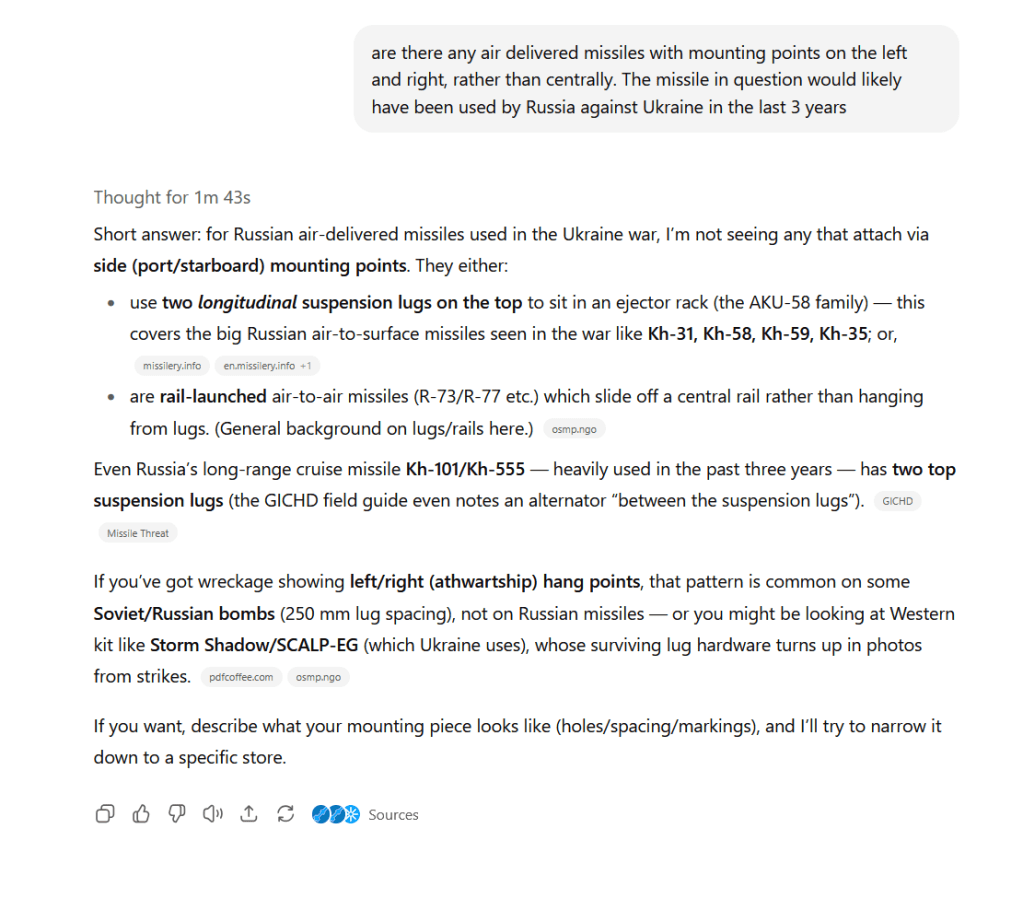
This seems more helpful. I decided to work my way through the examples provided.
The longitudinal lugs don’t appear to be what we are looking for – these include the Kh58, which as below, has two small lugs which clip into the delivery system… the kn31 was similar.

I suspected that the challenge item was not rail launched based on the description given (the challenge item would not connect well to a central rail) but checked the R-73 and R77 anyway:
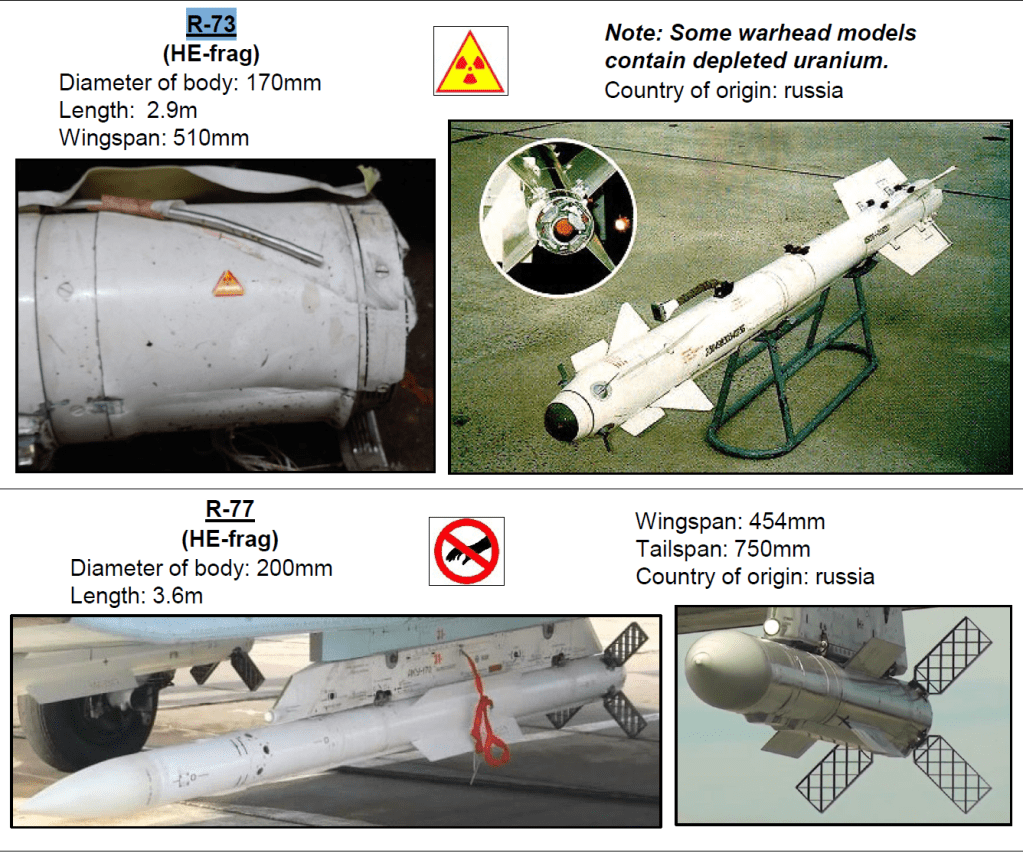
As expected, these do not look like what we are looking for.
Checking the kh101
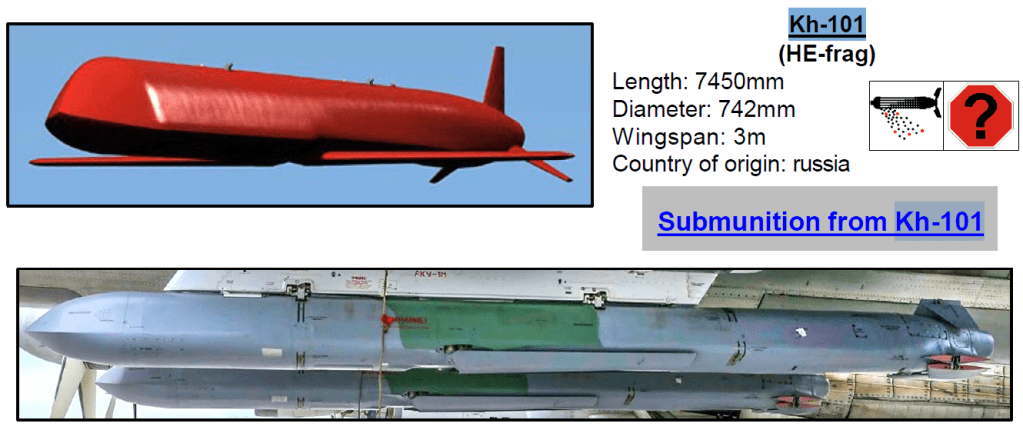
It’s not clear that this is what we are looking for, but the red image above has very obvious lugs that are visible on the top.
I did search in the Ukraine ammunitions guide for the kh-555 which was also mentioned by ChatGPT, but I was unable to locate it (this may be another ChatGPT failure).
I ran a google search for kh101 missile suspension lugs to try and get a better image to compare, and in the images section, located the below from the Open Source Munitions Portal – https://osmp.ngo/osmp311/:
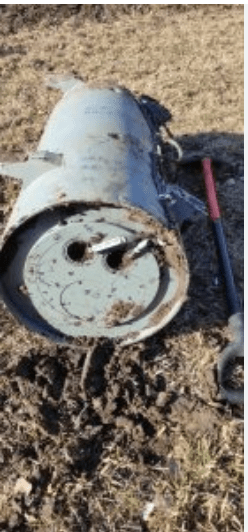
The similar images section were also helpful, with other examples from the Open Source Munitions Portal. I therefore went to the portal, and ran a search there for kh-101 missiles, where I found the below images (amongst others)

On the first of these two images, we can see the flat end, which is so apparent in the challenge image. The second shows the cord, which is very similar to that in the challenge image, and even includes silver coloured clasps, which we also see in the challenge image.
This is on top of the suspension lugs matching exactly what we were looking for in the challenge image.
This therefore seemed a likely option. Recall that ChatGPT also mentioned the Kh555 as having the same suspension lugs as the KH101. I had not been able to find the KH555 in the Ukraine guide, so I checked here in the Open Source Munitions Portal.
I was not able to find anything for the KH-555. I did find a KH-55 but this does not appear to match.
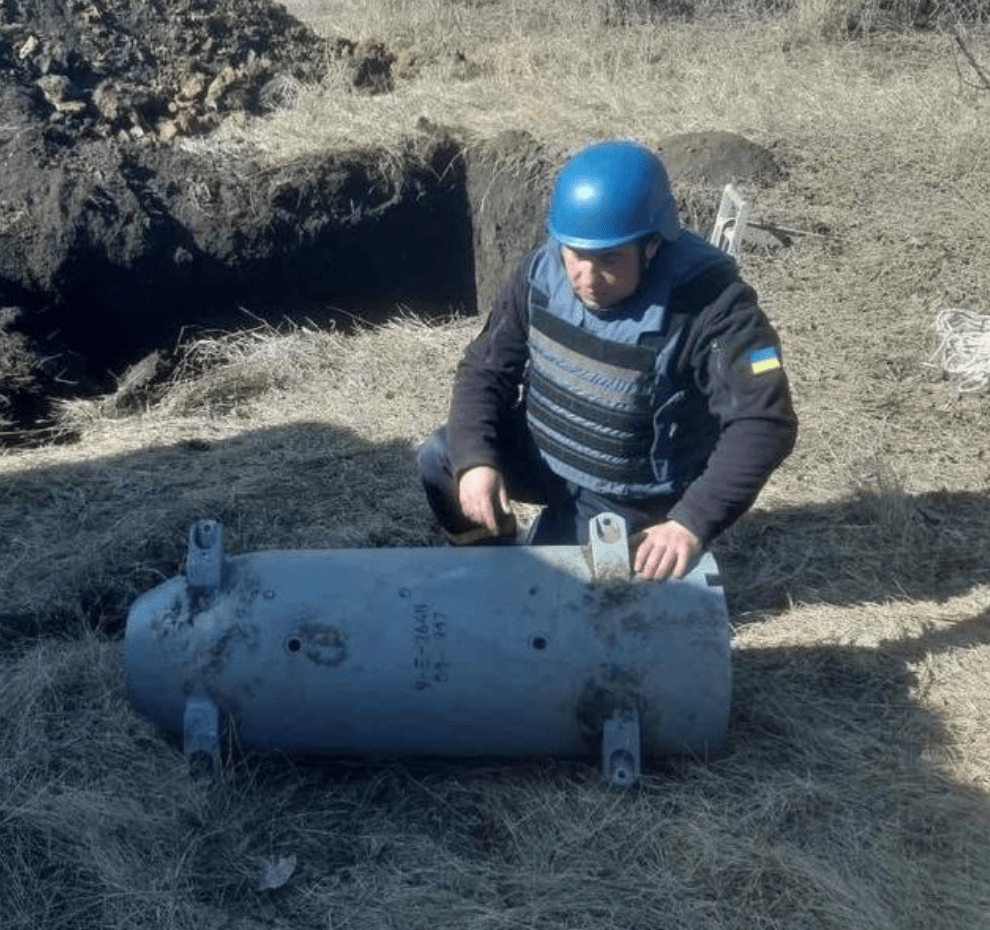
Back to the KH101, I also located further images from https://www.ukrinform.net/rubric-ato/3840766-sappers-neutralize-warhead-of-russian-kh101-missile-in-vinnytsia-region.html that convince me that this is the correct option:


This was indeed the solution.
Solution: KH-101


One thought on “Bellingcat Challenge – August 2025(Hidden Hazards)”